
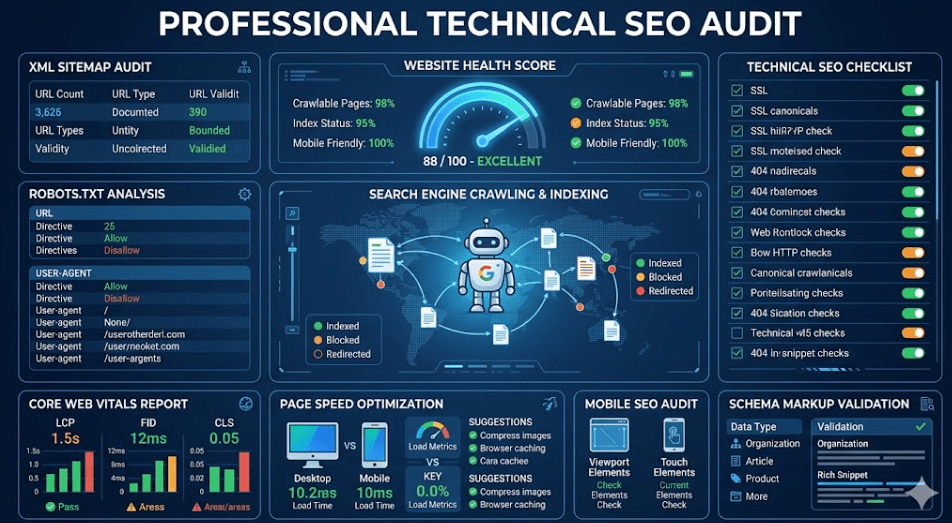
Technical SEO Audit: How to Find and Fix Website Issues
A Technical SEO Audit is one of the most important processes in search engine optimization. While content quality and backlinks play significant roles in rankings, technical issues can prevent search engines from properly crawling, indexing, and understanding a website.
Many websites lose valuable organic traffic because of hidden technical problems such as crawl errors, broken links, duplicate content, slow page speed, poor mobile usability, and indexing issues. These problems often go unnoticed until rankings begin to decline.
A Technical SEO Audit helps identify these issues before they negatively impact search performance. It provides a systematic approach to evaluating a website’s technical health and ensuring that search engines can efficiently access and process content.
As search engines continue to evolve and AI-powered search systems become more sophisticated, technical optimization is becoming increasingly important. Modern search platforms rely on well-structured websites to understand content, entities, and relationships between pages.
Whether you manage a blog, business website, eCommerce store, or enterprise platform, conducting regular Technical SEO Audits can improve search visibility, user experience, and long-term website performance.
What Is a Technical SEO Audit?
A Technical SEO Audit is the process of analyzing a website’s technical infrastructure to identify issues that may affect crawling, indexing, performance, and search visibility.
Think of it as a complete health checkup for your website.
During a Technical SEO Audit, SEO professionals evaluate multiple factors, including:
- Crawlability
- Indexability
- Website speed
- Core Web Vitals
- Mobile friendliness
- Internal linking
- Structured data
- XML sitemaps
- HTTPS security
- Technical errors
The primary goal is to ensure that search engines can efficiently discover, understand, and rank website content.
Key Benefits of a Technical SEO Audit
- Identifies hidden SEO issues
- Improves website performance
- Enhances user experience
- Supports higher rankings
- Improves crawl efficiency
- Strengthens AI search visibility
- Prevents traffic losses caused by technical problems
Regular audits help maintain a healthy website and create a strong foundation for all other SEO activities.
How to Perform a Technical SEO Audit
A successful Technical SEO Audit follows a structured process. Rather than attempting to fix everything at once, focus on the most important technical areas first.
Step 1: Check Crawlability
Search engines must be able to discover website pages efficiently.
Review:
- XML sitemap status
- Robots.txt file
- Internal linking structure
- Crawl errors in Google Search Console
Step 2: Verify Indexability
Ensure that important pages are indexed correctly.
Check:
- Indexed pages
- Noindex tags
- Canonical tags
- Duplicate content issues
Step 3: Analyze Website Speed
Website speed affects both user experience and rankings.
Evaluate:
- Page load times
- Image optimization
- Server response times
- Core Web Vitals
Step 4: Review Mobile Usability
Since Google uses Mobile-First Indexing, mobile optimization is essential.
Check:
- Responsive design
- Mobile page speed
- Touch-friendly navigation
- Mobile usability reports
Step 5: Audit Internal Linking
Internal links help search engines understand website structure.
Look for:
- Orphan pages
- Broken internal links
- Deep page structures
- Weak content connections
Step 6: Validate Structured Data
Schema markup helps search engines and AI systems understand content more effectively.
Review:
- Article Schema
- FAQ Schema
- Organization Schema
- Breadcrumb Schema
Step 7: Evaluate Core Web Vitals
Core Web Vitals measure real-world user experience.
Monitor:
- Largest Contentful Paint (LCP)
- Interaction to Next Paint (INP)
- Cumulative Layout Shift (CLS)
By following these steps, website owners can identify technical weaknesses and prioritize improvements that support long-term SEO growth.
Frequently Asked Questions (FAQ)
What is a Technical SEO Audit?
A Technical SEO Audit is a process used to identify and fix technical issues that may affect a website’s crawlability, indexability, performance, and search visibility.
Why is a Technical SEO Audit important?
Technical SEO Audits help uncover hidden issues that may prevent search engines from properly accessing and ranking website content.
How often should a Technical SEO Audit be performed?
Most websites should perform a Technical SEO Audit every three to six months. Larger websites may require more frequent audits.
What tools are used for Technical SEO Audits?
Common tools include:
- Google Search Console
- Google PageSpeed Insights
- Screaming Frog
- Ahrefs
- Semrush
- Bing Webmaster Tools
Can Technical SEO Audits improve rankings?
Yes. Fixing technical issues can improve crawlability, user experience, and search engine understanding, which may contribute to stronger rankings.
What are the most common Technical SEO issues?
Common issues include:
- Crawl errors
- Broken links
- Duplicate content
- Slow page speed
- Missing schema markup
- Poor mobile usability
Do AI-powered search engines benefit from Technical SEO?
Yes. Technical SEO helps AI systems understand content structure, entities, and relationships, improving visibility in AI-powered search environments.
Conclusion
A Technical SEO Audit is one of the most effective ways to improve website health and search performance. By identifying and fixing technical issues, businesses can create stronger foundations for both traditional SEO and emerging AI-powered search systems.
Regular audits help ensure that search engines can efficiently crawl, index, and understand website content while also improving user experience. From crawlability and indexability to page speed and structured data, every aspect of technical optimization contributes to long-term success.
As search continues to evolve, websites with strong technical foundations will be better positioned to achieve higher visibility, attract more organic traffic, and remain competitive in an increasingly AI-driven search landscape.
Pingback: Technical SEO Audit Checklist: 30 Essential SEO Checks for 2026
Pingback: What Is a Website Audit? Complete SEO Audit Guide for 2026