
Luxury Ecommerce SEO Case Study: How Organic Visibility Grew In 6 Months
Most SEO case studies focus on traffic.
Others focus on rankings.
Some focus on leads.
But one of the biggest mistakes people make when evaluating SEO performance is ignoring the stage that comes before all of those metrics.
Visibility.
Before traffic grows.
Before rankings improve.
Before leads arrive.
Google must first begin trusting and understanding a website.
This case study focuses on exactly that process.
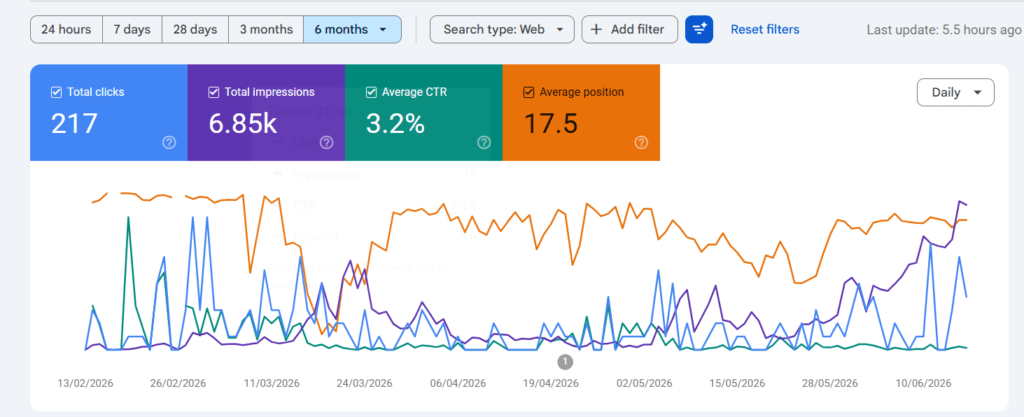
Over a six-month period, a luxury ecommerce website operating in a highly competitive niche experienced measurable improvements in organic visibility, keyword reach, and overall search presence.
While client confidentiality prevents me from disclosing the brand name, the lessons learned from this project are valuable for any business looking to improve its search performance.
As an SEO professional, I, Soumyaditya Biswas, have become increasingly interested in how modern search engines evaluate expertise, authority, and topical relevance.
This project became an excellent example of how content strategy, entity SEO, and GEO optimization can work together to create long-term growth.
Why Visibility Matters More Than Most Businesses Realize
Many business owners become frustrated when they launch a new website or begin investing in SEO.
They expect immediate results.
They expect rankings.
They expect traffic.
And they expect leads.
Unfortunately, search engines do not work that way.
Google first needs evidence that a website deserves visibility.
This process typically happens in stages.
Stage 1: Discovery
Google crawls pages.
Indexes content.
Identifies entities.
Understands relationships between topics.
Stage 2: Testing
Google begins showing pages for a wider range of keywords.
Impressions increase.
Rankings fluctuate.
Traffic remains inconsistent.
Stage 3: Expansion
Keyword coverage grows.
Visibility increases.
More pages begin appearing in search results.
Stage 4: Authority Building
Consistent rankings improve.
Traffic becomes more stable.
Conversions begin increasing.
Many businesses mistakenly judge SEO success too early.
The reality is that visibility growth often appears before traffic growth.
This project demonstrated that principle clearly.
The Starting Point
When the campaign began, the website faced several challenges.
The niche was competitive.
The site lacked strong topical authority.
Entity coverage was limited.
Content depth was inconsistent.
The website had products.
But it lacked enough supporting content to help search engines understand its expertise.
This created a common problem.
Google understood what the company sold.
But it did not fully understand why the company should be considered an authority within its industry.
That distinction matters.
Especially in competitive sectors where trust, expertise, and credibility influence rankings.
Understanding The Role Of Entity SEO
Traditional SEO often focuses heavily on keywords.
Keywords remain important.
However, modern search engines increasingly rely on entities.
An entity is a person, company, location, concept, product, or topic that search engines can clearly identify and connect within a knowledge graph.
For this project, one of the primary goals was strengthening entity relationships throughout the website.
This included:
• Expanding industry-related content
• Improving topical relevance
• Building stronger semantic connections
• Increasing supporting informational content
• Reinforcing expertise signals
Instead of creating content solely around isolated keywords, the strategy focused on building a broader topic ecosystem.
This helps search engines better understand the website’s place within its industry.
Why GEO Optimization Is Becoming Important
One of the areas I have spent considerable time studying is GEO optimization.
GEO stands for Generative Engine Optimization.
While traditional SEO focuses on search rankings, GEO focuses on helping content become discoverable and useful within AI-powered search experiences.
Platforms such as:
• ChatGPT
• Gemini
• Perplexity
• Copilot
Increasingly rely on authoritative information when generating responses.
Because of this shift, websites must provide:
• Clear answers
• Strong entity relationships
• Expert-level content
• Trustworthy information structures
This project incorporated GEO principles alongside traditional SEO efforts.
The goal was not simply to rank.
The goal was to create content that search engines and AI systems could easily understand and reference.
The Importance Of Content Expansion
One of the biggest opportunities identified during the campaign was content depth.
Many ecommerce websites focus exclusively on products.
The problem is that products alone rarely establish topical authority.
Search engines want context.
They want supporting information.
They want educational resources.
They want expertise signals.
To address this, the strategy focused on creating content around:
• Industry topics
• Buying considerations
• Educational resources
• Frequently asked questions
• Comparison content
• Informational guides
This approach helped expand the website’s topical footprint.
As more content was indexed, search visibility began increasing.
More keyword opportunities emerged.
And Google gained a better understanding of the website’s expertise.
What Happened Over Six Months?
One of the most encouraging indicators was the growth in search visibility.
Search impressions began increasing steadily.
Google started displaying pages for a broader range of search queries.
Keyword reach expanded.
More content entered the discovery phase.
These signals may seem small compared to massive traffic numbers.
However, experienced SEO professionals understand their significance.
Visibility growth often represents the foundation upon which future traffic growth is built.
In many cases, impressions are the first sign that a strategy is working.
And in this project, that signal became increasingly clear as the months progressed.
The Metrics That Indicated Positive SEO Momentum
One of the most important lessons from this project is that SEO growth does not always begin with traffic.
It often begins with visibility.
As search engines gain confidence in a website, they begin testing its content across a wider range of search queries.
This typically appears through increasing impressions.
Over the course of six months, the website experienced:
• Growing search impressions
• Expanding keyword coverage
• Improved average positions
• More consistent organic clicks
• Stronger content discovery
For many businesses, these signals represent the transition from Google’s testing phase into a broader visibility phase.
When this happens, future growth opportunities become significantly larger.
Rather than relying on a handful of keywords, the website begins appearing across a wider topical landscape.
This is exactly what every SEO campaign should aim to achieve.
Why Topical Authority Was A Major Factor
One of the biggest ranking challenges in competitive industries is authority.
Google wants confidence.
It wants evidence.
It wants to understand whether a website genuinely deserves visibility.
This is where topical authority becomes important.
Instead of publishing isolated content pieces, the strategy focused on creating content clusters.
Each piece supported the broader subject area.
This helped strengthen relationships between:
• Products
• Industry concepts
• Supporting educational content
• Commercial intent topics
• Informational search queries
Over time, this creates stronger semantic signals.
Google begins seeing the website as a more complete resource.
And that often translates into improved visibility.
Many websites fail because they focus on individual pages.
Successful websites often win because they build entire topic ecosystems.
What AI Search Is Teaching Us About SEO
One of the most interesting developments in modern search is the rise of AI-generated answers.
Platforms such as ChatGPT, Gemini, Perplexity, and Copilot are changing how people discover information.
Instead of clicking ten blue links, users increasingly receive direct answers.
This creates new challenges.
But it also creates opportunities.
Businesses that create authoritative content can become part of these AI-generated responses.
That requires a different mindset.
Instead of asking:
“How do we rank for this keyword?”
The better question becomes:
“How do we become the best answer?”
During this project, content was structured to answer questions clearly.
Topics were expanded comprehensively.
Important entities were reinforced consistently.
This GEO-focused approach helps improve the chances of future AI visibility.
As someone actively studying GEO and AEO strategies, I believe this will become one of the most important areas of SEO over the next several years.
Lessons Business Owners Can Learn From This Case Study
Many business owners expect SEO to work like paid advertising.
They want immediate results.
Immediate traffic.
Immediate sales.
The reality is different.
SEO is an investment in long-term visibility.
The businesses that succeed usually focus on:
Consistency
Publishing content consistently builds trust with both users and search engines.
Expertise
Demonstrating genuine knowledge helps strengthen authority signals.
Entity Coverage
Covering related topics creates stronger semantic relationships.
User Intent
Content must solve real problems.
Not simply target keywords.
Patience
Growth often begins with impressions before traffic follows.
The businesses that understand these principles are usually the ones that achieve sustainable results.
What I Would Do Differently Today
Every SEO project teaches valuable lessons.
If I were starting this project again today, I would place even greater emphasis on:
• AI search visibility
• Entity mapping
• Question-based content
• Expert commentary sections
• First-party research
• Brand authority signals
The SEO industry is evolving rapidly.
Traditional ranking factors remain important.
But AI-driven search experiences are introducing new opportunities.
Businesses that adapt early will likely gain a significant advantage.
Why Personal SEO Experiments Matter
One lesson I have learned throughout my SEO journey is that real-world experimentation matters.
Reading guides helps.
Watching tutorials helps.
But nothing replaces working directly with live websites.
Projects like this provide valuable insights that cannot be learned from theory alone.
Each website behaves differently.
Each industry presents unique challenges.
Each growth curve tells a different story.
That is one reason I continue documenting SEO observations, testing content strategies, studying AI search behavior, and exploring how search engines interpret expertise and authority.
The more data we analyze, the better decisions we can make.
The Future Of SEO, GEO, And AI Search
SEO is no longer just about rankings.
It is becoming a broader discipline that includes:
• Search visibility
• Entity optimization
• Knowledge graph alignment
• AI search readiness
• Brand authority
• User experience
Businesses that understand these shifts will be better positioned for future growth.
The goal is no longer simply appearing in search results.
The goal is becoming a trusted source of information wherever people search.
Whether that search happens on Google, ChatGPT, Gemini, Perplexity, or future AI-powered platforms.
Frequently Asked Questions
What is a luxury ecommerce SEO case study?
A luxury ecommerce SEO case study demonstrates how search engine optimization strategies improve visibility, rankings, and organic performance for businesses operating in premium product markets.
Why are impressions important in SEO?
Impressions indicate how often content appears in search results. Growing impressions often signal increasing visibility before significant traffic growth occurs.
What is entity SEO?
Entity SEO focuses on helping search engines understand relationships between people, businesses, products, services, and topics rather than relying solely on keywords.
What is GEO optimization?
Generative Engine Optimization (GEO) helps content become more discoverable and useful within AI-powered search systems such as ChatGPT, Gemini, Perplexity, and Copilot.
How long does SEO take to show results?
SEO timelines vary, but many websites begin showing visibility improvements within several months. Sustainable growth often requires consistent effort over longer periods.
Why is topical authority important?
Topical authority helps search engines understand that a website has comprehensive expertise within a particular subject area, improving overall visibility potential.
Can impressions grow before traffic?
How does AI search affect SEO?
The first sign of success is often visibility.
Search engines begin expanding exposure.
The experience reinforced something I strongly believe as an SEO professional.
The algorithms will change.
Search behavior will evolve.
But one principle remains constant.
The websites that provide the most value usually win.
Author: Soumyaditya Biswas
SEO Strategist | Entity SEO | GEO Optimization | AI Search Visibility | Content Strategy
Pingback: International B2B SEO Case Study: Growing Organic Visibility in 60 Days
Pingback: B2B Technology SEO Case Study: Improving Organic Visibility
Pingback: Organic Visibility Growth Case Study: 51.9K Impressions & 255 Clicks
Pingback: Organic Visibility Growth Case Study | International B2B SEO
Pingback: Healthcare SEO Case Study: 620% Click Growth & Visibility Improvement